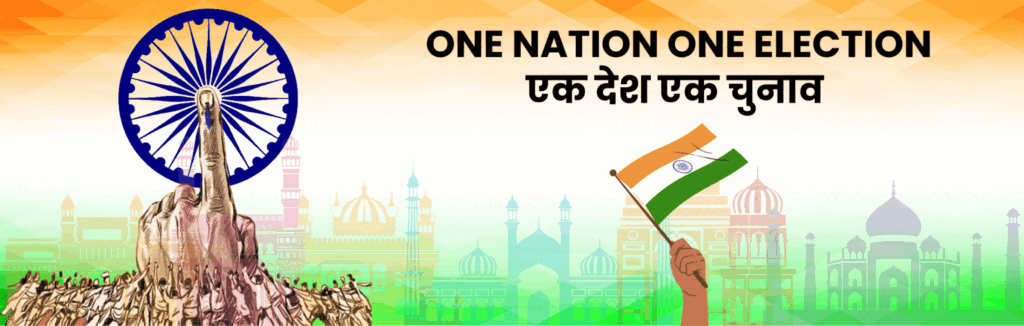
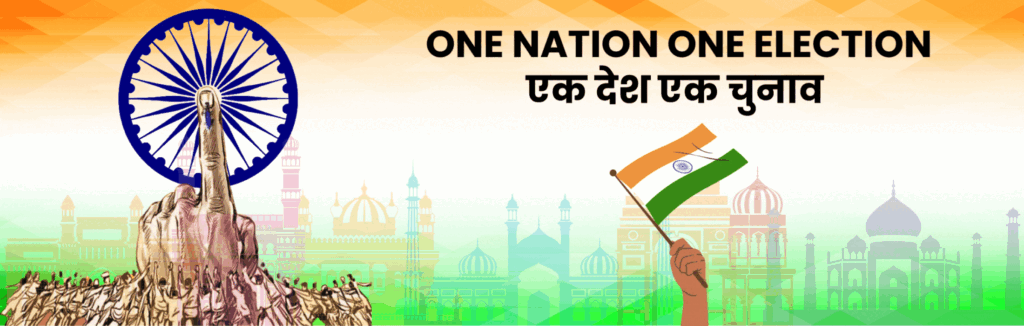
The idea of One Nation One Election has drawn a lot of interest in India’s political and democratic landscape. With the help of this reform proposal, the State Legislative Assemblies and the Lok Sabha (Parliament) will hold their elections on the same day, once every five years, allowing voters to cast their ballots for both. Elections are currently held regularly and at various periods in different states, which results in ongoing political campaigns, significant government spending, and disruptions to governance because of the Model Code of Conduct’s implementation. One Nation One Election is not a completely new idea; India had a comparable system for the first twenty years after gaining independence, but it was interrupted by the early dissolution of the Lok Sabha and several state assemblies. Sabha. This change is being reexamined now in an effort to improve the election process’s effectiveness, economy, and development focus https://onoe.gov.in/
one nation one election meaning
The term “One Nation One Election” describes the simultaneous holding of elections for the Lok Sabha (Parliament) and all State Legislative Assemblies across India. This approach would enable voters to elect both their state and national representatives jointly once every five years, rather than having separate polls in various states throughout the year. This idea’s primary goals are to lower expenses, lessen the strain of regular elections, enhance governance, and guarantee increased voter turnout.
one nation one election essay
An essential essay topic that emphasizes the idea of holding simultaneous elections for the Lok Sabha and the State Legislative Assemblies is the concept of One Nation One Election. By conducting polls once every five years, the primary goals are to increase voter participation, prevent governance disruptions brought on by the Model Code of Conduct, and lower the exorbitant expense of frequent elections. It has drawbacks, such as the requirement for constitutional revisions, logistical arrangements, and federalism concerns, despite its promises of efficiency, improved governance, and less political division. An essay on this subject should discuss its significance, background, advantages, difficulties, and future directions, making it extremely pertinent to students and competitive tests..https://khabrdaily24.com/wp-admin/post.php?post=427&action=edit
One Nation One Election:
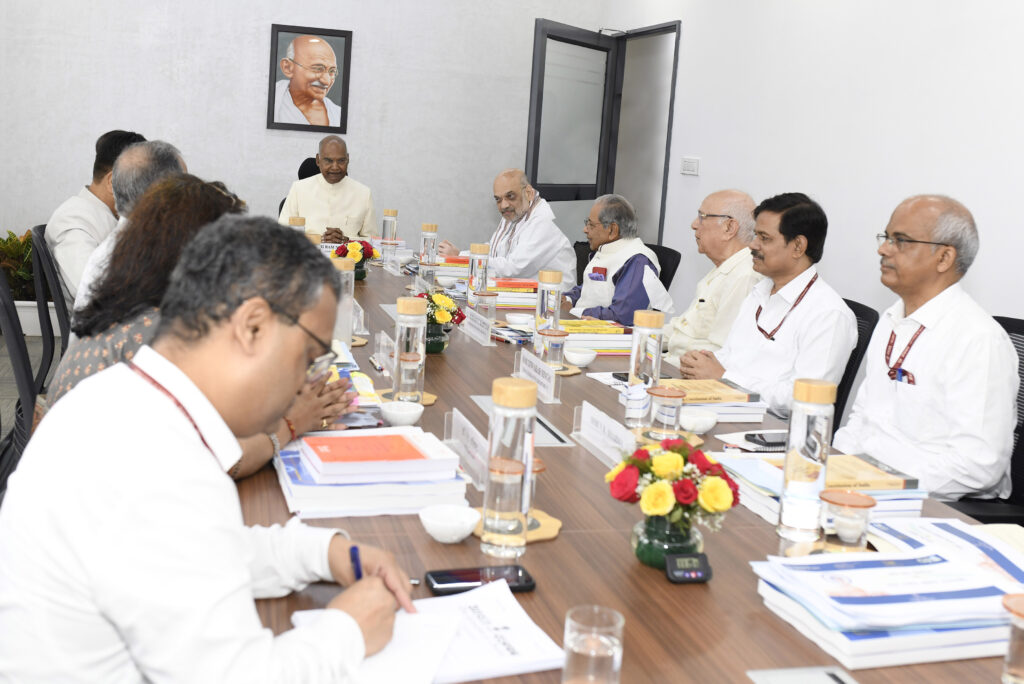
Holding simultaneous elections for the Lok Sabha and all State Legislative Assemblies nationwide is known as “One Nation One Election.” Voters would simultaneously cast ballots for their state and federal representatives rather than doing so several times over the course of five years. This concept has been researched by the Law Commission, the Election Commission of India, and other expert committees to look at its viability, means of implementation, and its effects on Indian democracy.

One Nation, One Election advantage
Cost Savings: By holding elections jointly, billions of rupees will be saved that would have been spent on building up electoral infrastructure, sending out security forces, and arranging separate polls. Reduced Upheaval in Governance Because of the Model Code of Conduct, which limits government decision-making, frequent elections impede governance. Governments will be able to concentrate more on long-term growth and policy with just one election cycle.
Decreased Political Polarization: Constant election campaigning frequently causes political divisions in society. This influence might be lessened by a synchronized election system. Administrative Efficiency: It will lessen the workload for government employees, security personnel, and the Election Commission, who are frequently involved in election duties Background and History
When political unrest led to the early dissolution of several state assemblies and the subsequent early dissolution of the Lok Sabha in 1970, the system collapsed. Since then, India has held elections for several states at various periods, leading to a high number of polls. The viability of holding simultaneous elections again with careful preparation has been emphasized in both the Law Commission’s 170th Report and the Election Commission’s recommendations.
one nation one election bill
Every five years, simultaneous elections for the Lok Sabha and all State Legislative Assemblies are to be held in India under the One Nation One Election Bill. The purpose of the law is to lessen the number of elections that are now held at various times in different states, which results in high costs, disruptions to government because of the Model Code of Conduct, and a significant workload for the Election Commission and security forces. The measure aims to save public funds, increase administrative effectiveness, and free up governments to concentrate on development rather than constant campaigning by consolidating all elections under a single schedule. But there are also issues with the law, like the requirement for constitutional changes, coordinating several state election cycles,and resolving issues with regional representation and federalism. A major shift in India’s electoral process that strikes a balance between cost-effectiveness and democratic governance would result from the implementation of the One Nation One Election Bill.
one nation one election lok sabha
Every five years, elections for the Lok Sabha (Parliament) and all State Legislative Assemblies are held simultaneously under the concept of “One Nation, One Election.” This plan seeks to increase voter engagement, guarantee governance free from frequent disruptions brought on by the Model Code of Conduct, and lower the expense and frequency of elections. If it were put into practice, voters would vote for both state and federal representatives simultaneously, improving the political process’ efficiency and focus on growth.
one nation one election upsc
The idea of holding simultaneous elections for the Lok Sabha and all State Legislative Assemblies throughout India is referred to as “One Nation One Election” in the context of UPSC preparation. Reducing the number of elections, lowering expenses, preventing governance disruptions from the Model Code of Conduct, and increasing voter turnout are the goals. Up until 1967, it was used in India, but it was discontinued because some legislatures were dissolved too soon. It is a crucial topic for UPSC polity and governance since, while its promises of efficiency and stability, it also faces difficulties including the necessity for constitutional modifications, logistical difficulties, and federalism concerns.
Conclusion
For UPSC, keep in mind that One Nation One Election is a constitutional challenge as well as a governance reform. It may save money and improve governance, but in order to maintain federal balance, it requires careful planning, legislative changes, and bipartisan agreement.