
introduction
new gst rates India has taken a bold step in reshaping its taxation system with the introduction of a simplified GST structure. Effective September 22, 2025, the Goods and Services Tax (GST) has been reformed to make taxation easier for both consumers and businesses. If you’ve been wondering what exactly has changed, how it affects your daily expenses, and what it means for the broader economy, this guide breaks it all down in simple words.
new gst rates 2.0 in India: Complete Guide to New GST Rates, Benefits, and Impact
What is GST and Why Was a Change Needed?
In July 2017, India implemented the Goods and Services Tax (GST) as a single, unified tax system to replace a convoluted network of indirect taxes at the federal and state levels, including. While it brought more transparency, the multiple tax slabs—5%, 12%, 18%, and 28%—confused consumers and increased compliance headaches for businesses.
Over time, industry bodies, economists, and even small traders demanded a simpler tax regime. This move has been nicknamed “GST 2.0” because it represents the biggest change since GST’s inception.
New GST rates list
new gst rates Finally, in 2025, the government responded by implementing a two-tiered GST framework along with a distinct slab for luxury and sin items.
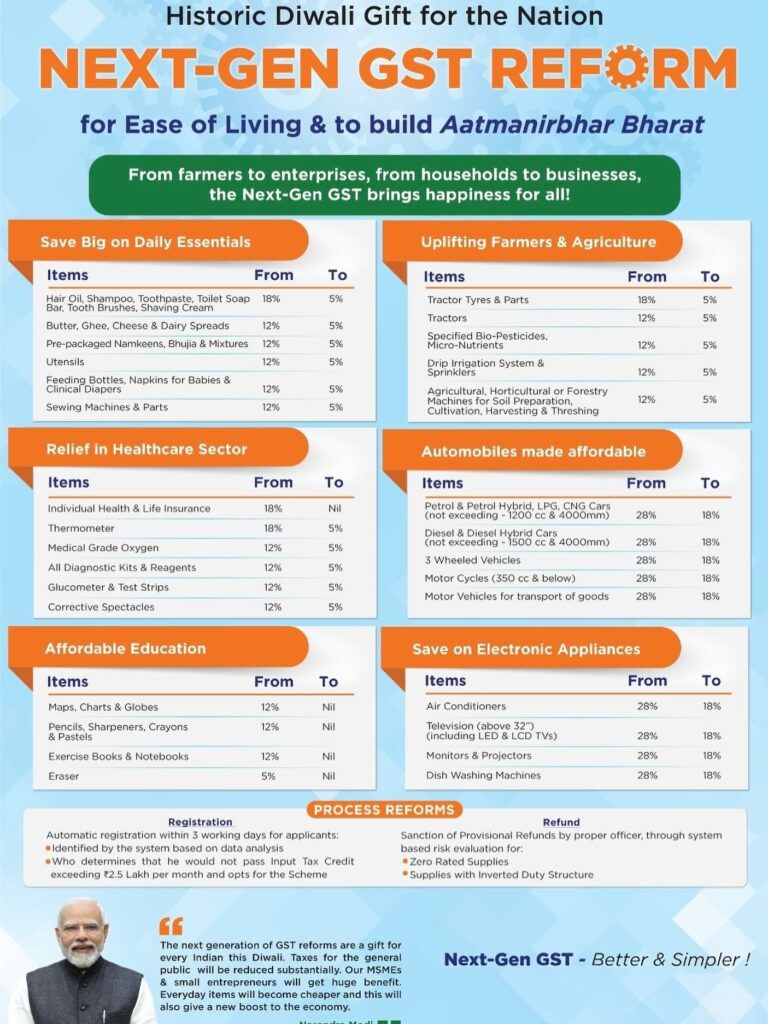
The GST Council has trimmed down the number of tax slabs to just three major categories:
Zero GST (NIL rate) Essential goods and services
5% GST Daily-use items, agricultural products, electric vehicles, and certain healthcare products
18% GST Standard goods and services like electronics, small vehicles, and cement
40% GST (Super Slab) Luxury and sin goods such as tobacco, premium cars, online gambling, and high-end drinks
This restructuring is expected to reduce confusion, improve compliance, and encourage spending.
What Gets Cheaper with GST 2.0?

Here’s the part everyone loves—knowing what will now cost less. With many items moving to the lower or NIL category, consumers can expect some relief in their monthly budgets.
1. Essentials Now Tax Free (0% GST)
Life-saving medications, such as those for uncommon disorders and cancer
Education essentials such as erasers, notebooks, and maps
Insurance services, including individual life and health insurance
Dairy products like paneer and ultra-high temperature milk
Indian breads such as chapatis and khakras
This change makes everyday living more affordable while also supporting healthcare and education.
2. Daily Use Items at 5% GST
Toiletries like soaps, shampoos, toothpaste, and hair oil
Kitchenware and feeding bottles
Eyewear and spectacles
Agricultural machinery and diagnostic equipment
Electric vehicles (EVs)
This move is expected to encourage sustainable consumption (with EVs at just 5%) and also make healthcare and agriculture more cost-effective.
What Stays in the Mid-Range (18% GST)?

The 18% slab is now the standard category for most common goods and services that are neither basic essentials nor luxury items. Some examples include:
new gst rates impact Appliances for the home, including air conditioners, refrigerators, and televisions
new gst rates impact Construction materials like cement
Small cars (petrol engines up to 1200 cc, diesel up to 1500 cc, and length under 4 meters)
Motorcycles under 350 cc engine capacity
Auto parts and accessories
This ensures that essential but higher-value goods continue to generate reasonable tax revenue without overburdening consumers. https://cbic-gst.gov.in/gst-goods-services-rates.html
What Gets Costlier (40% GST)?
new gst rates impact To balance revenue losses from cutting rates on essentials, the government has placed luxury and sin goods under a hefty 40% GST slab. Items that fall under this category include:
Cigarettes, gutka, pan masala, and other tobacco products
Sugary, carbonated, and caffeinated drinks
High end automobiles and luxury motorcycles above 350 cc
Yachts, private jets, and helicopters
Online gambling and betting platforms
Tickets for premium sporting events like IPL matches (unless exempted)
This higher tax is aimed at discouraging consumption of harmful goods while ensuring that luxury consumption contributes fairly to government revenues.
Why This Change Matters
The revised GST structure is not just about tax rates—it’s about simplification and long-term economic benefits. Here’s why it matters:
- new gst rates For Consumers
Lower tax rates on essentials and daily-use products mean more savings. Whether it’s medicines, groceries, or personal care, your wallet will feel lighter on tax deductions. Families may also be encouraged to invest in electric vehicles thanks to the low GST rate.
2. new gst rates For Businesses
With fewer tax slabs, compliance becomes easier. Earlier, businesses had to categorize products into multiple rates, often leading to disputes and errors. Now, a simple three-slab system reduces confusion and paperwork.
3. new gst rates For the Economy
Economists predict that the GST reform will lower inflation by almost 1%. . Cheaper goods can stimulate demand, especially during the festive season. At the same time, higher taxation on luxury and sin goods ensures that revenue collection doesn’t suffer drastically.
How Much Revenue Will the Government Lose in new gst rates

Experts estimate that the government could lose anywhere between ₹47,000 crore to ₹93,000 crore annually due to lower tax rates on essential items. However, this short-term loss is expected to be offset by:
Higher compliance rates
Increased consumption
Boost to sectors like FMCG, automobiles, and electronics
This strategy is similar to “earning less per product but selling more overall.”
Industry Reactions
Retailers & FMCG companies: Positive, since lower tax rates could boost sales.
Healthcare industry: Welcomed the move to make life-saving medicines tax-free.
Automobile sector: Excited, as lower GST on small cars and EVs may revive sales in a sluggish market.
Luxury brands: Concerned about demand slowdown due to the 40% slab.
Stock markets already reacted positively, with key indices rising after the announcement, signaling confidence in the reform.
Will GST 2.0 Make Life Easier?
Yes. By reducing complexity, the government has not only made taxes simpler but also consumer-friendly. For an average household, the changes mean:
Lower monthly grocery and personal care bills
Reduced costs on healthcare and education needs
Affordable electronics and small vehicles
Incentives to shift to electric mobility
Quick Recap of GST 2.0
GST Rate Category Examples
0% Essentials Medicines, insurance, dairy products, notebooks
5% EVs and everyday usage productsElectric cars, soaps, shampoos, eyeglasses, and farming equipment
18% Standard goods TVs, ACs, cement, small cars, motorcycles under 350cc
Concluding remarks
GST 2.0 is a positive development for the average person since it will increase disposable income, improve access to healthcare, and provide incentives for the adoption of environmentally friendly technology. The general populace is unquestionably the winner, despite the complaints of luxury and sin products customers.
With growth, equity, and simplicity at its heart, GST 2.0 is expected to boost the economy and consumer confidence in the years to come.
please read my other artical here the link https://khabrdaily24.com/wp-admin/post.php?post=204&action=edit